

Cyanide gold leaching depends on keeping the pulp alkaline throughout the circuit — not as a formality, but because cyanide itself becomes unstable and dangerous at lower pH. Below roughly pH 9.5, free cyanide starts converting to hydrogen cyanide (HCN) gas, which is both a safety hazard and a loss of the reagent doing the actual gold dissolution.
Sodium hydroxide is the most common alkali used to hold that pH line. As a strong, fast-reacting base, it neutralizes the acid-generating minerals in the ore (particularly sulfides) and keeps the pulp in the range where cyanide stays as a stable, soluble CN⁻ ion rather than off-gassing.
Dosing is not a "set and forget" step. Ore mineralogy changes pH demand from one blend to the next, and getting it wrong in either direction costs money — under-dosing risks HCN loss and slower leach kinetics, over-dosing wastes reagent and adds unnecessary cost per tonne processed.
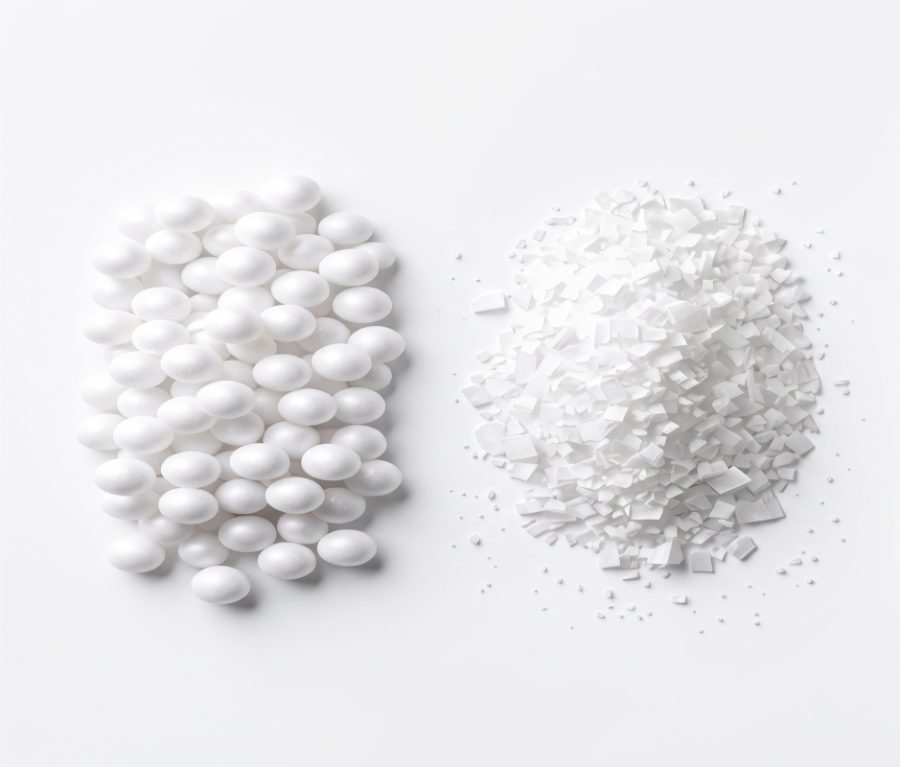
GGI Chemicals supplies sodium hydroxide as flakes, pearls, or solution, so operations can match the form to their dosing system — solid product for dry addition points, solution for inline dosing where dissolution time matters.
Because pH control underpins the entire leach economics, caustic soda quality and consistent supply matter as much as the cyanide itself — an inconsistent alkali supply shows up downstream as inconsistent recovery.